 GDU

 UUUFLY
 DJI
 MMC
 GDU
 XAG
 AOLAN
 KEEL
 SKY NEXT
- DJI Matrice-4T
- DJI Matrice 4E Drone
- DJI Matrice 4TD
- DJI Matrice 30T
- DJI Mavic 3 Emterprise
- DJI Mavic 3M Multispectral Drone
- DJI RC 2 Plus Industry Plus
- DJI Matrice 4 Series Battery
- DJI Matrice 4D Series Batteries
- TB65 Intelligent Flight Battery
- TB100 Smart Flight Battery
- WB37 Battery
- DJI Accessories

Global logistics is pretty much moving into a real-world drone phase now. For buyers, it’s no longer just about how far a drone can fly or how much it can carry. They’re also weighing things like route autonomy, how well it handles bad weather, battery swapping, software integration, and the service support behind it. That’s where this guide comes in: “2026 Top Types of Logistics Drones for Global Buyers.” It breaks down the main categories for international procurement teams—and keeps the focus on lawful, civilian uses and business value you can actually measure.
Raffaello D’Andrea—co-founder of Verity and a pretty respected robotics researcher—put it well when he said, 'The future of robotics isn't about replacing humans; it's about augmenting them.' And honestly, that idea fits today's logistics drones perfectly. Delivery drones can shuttle small parcels between distribution centers and customers nearby. Cargo drones? They can handle heavier loads in remote industrial areas. Then there are warehouse drones, which scan inventory, keep an eye on storage zones, and cut down on all that manual counting. So, inspection drones? They can take a look at roofs, yards, and all sorts of infrastructure—and honestly, they do it with a lot less disruption to whatever's going on.
Honestly, performance still depends a lot on local conditions. Wind can mess with flight plans, and cold weather? That can cut battery endurance pretty quickly. So a perfect demo doesn't always mean it'll hold up over a full year of operation. The market's still pretty uneven, too. Some systems offer impressive autonomy, but their maintenance networks are limited. Others have reliable hardware, yet the software integration side is weaker. So before they sign anything, global buyers really ought to dig into pilot data, training procedures, how easy it is to get spare parts, cybersecurity controls, and regional support. Honestly? The best option might not be the fastest drone. It could be the one that just keeps performing, day after day, alongside real workers, real shelves, and real delivery schedules.

Multirotor Delivery Drones: DJI FlyCart 30 Supports Up to 30 kg
Multirotor delivery drones are becoming practical tools for short-range logistics, especially where roads are slow, damaged, or difficult to access. Heavy-lift models can support payloads of up to 30 kg, depending on battery condition, weather, route length, and equipment configuration. That capacity may suit medical supplies, maintenance parts, food containers, or boxed industrial components.
The 30 kg figure can look decisive. It is not. A real operation must weigh the cargo, packaging, battery reserve, and landing equipment together. During field planning, I would test smaller loads first, using marked landing zones and secured handover points. Operators should inspect propellers, motors, batteries, and communication links before every flight. Wind matters greatly. A calm warehouse test cannot represent an exposed hillside.
These drones can reduce van trips and reach isolated sites quickly. However, they still need trained personnel, approved routes, weather checks, and documented maintenance. Payload shape also matters; a compact 20 kg case may fly better than a loose 25 kg bundle. I would leave a safety margin below the advertised limit. That choice costs some efficiency, but it improves control and repeatability. The weak point is often not the aircraft. It is rushed planning.
| Drone Type | Typical Payload | Typical Flight Endurance | Typical Operating Range | Best-Fit Logistics Use | Key Buying Considerations |
|---|---|---|---|---|---|
| Heavy-Lift Multirotor | 10–30 kg | 15–40 minutes | Up to 15 km one way, subject to regulations and battery load | Medical supplies, industrial parts, emergency relief and short-distance parcel delivery | Payload-to-battery balance, redundant motors, weather resistance, secure cargo attachment and landing accuracy |
| Medium-Lift Multirotor | 3–10 kg | 20–45 minutes | Up to 20 km one way | Retail parcels, food delivery, pharmacy distribution and warehouse-to-site transport | Operating noise, battery-swapping capability, obstacle sensing and compatibility with delivery boxes |
| Compact Multirotor | Up to 3 kg | 20–35 minutes | Up to 10 km one way | Light parcels, documents, laboratory samples and last-mile urban delivery | Low operating cost, compact storage, positioning accuracy and safe operation near buildings |
| Fixed-Wing Delivery Drone | 1–10 kg | 60–180 minutes | 50–200 km, depending on configuration | Regional distribution, rural routes, long-distance medical and humanitarian logistics | Launch and recovery requirements, route planning, wind tolerance and limited hover capability |
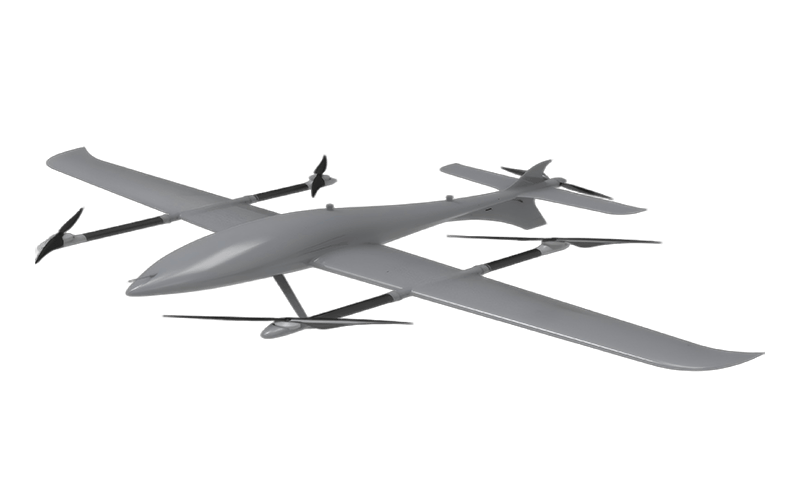
| Hybrid VTOL Delivery Drone | 2–15 kg | 60–150 minutes | 50–150 km, depending on payload and battery capacity | Long-distance routes requiring vertical takeoff and landing at locations without runways | Transition reliability, maintenance complexity, energy management and available landing space |
| Autonomous Cargo Drone | 5–30 kg | 20–90 minutes | 10–80 km, depending on aircraft design | Scheduled cargo routes between warehouses, worksites, farms and remote facilities | Autonomous navigation, remote supervision, detect-and-avoid systems, communications coverage and fleet software |
| Tethered Logistics Drone | 5–30 kg suspended or supported load | Several hours with continuous ground power | Usually within a fixed operating zone | Stationary lifting, temporary supply delivery, disaster response and construction-site support | Tether strength, ground power supply, wind stability, operating height and site safety controls |
Mercury X30 Multirotor Drone: Precision Logistics and Advanced Aerial Surveillance in Focus
The X30 multirotor drone is designed for precision logistics and advanced aerial surveillance in demanding environments. Its robust airframe and dependable flight systems support seamless cargo transport, helping operators move essential supplies between locations where roads are congested, damaged, or difficult to access. GPS-autonomous navigation enables repeatable routes and accurate positioning, while onboard flight intelligence can reduce pilot workload during long or complex missions. These capabilities are particularly valuable for emergency response teams, infrastructure inspection, medical supply delivery, and remote-site operations.
The commercial value of such technology is reflected in industry research. Grand View Research estimates that the global commercial drone market was valued at approximately $30.6 billion in 2022, with strong growth expected through 2030. The Federal Aviation Administration has also reported hundreds of thousands of registered civil drones in the United States, highlighting the rapid expansion of professional aerial operations. Within this growing market, the X30’s combination of autonomous GPS flight, cargo capacity, and persistent observation supports more efficient decision-making. Its surveillance role can provide real-time situational awareness across industrial facilities, transport corridors, and disaster-affected areas, while its reliability-focused design helps maintain operational continuity when missions are time-sensitive and environmental conditions are challenging.

FAQS
Some heavy-lift models support payloads up to 30 kilograms. That figure includes neither packaging nor landing equipment. Battery condition, wind, route length, and configuration reduce practical capacity. A compact 20-kilogram case may fly better than a loose 25-kilogram bundle. Leave a safety margin. That margin matters.
Inspect propellers, motors, batteries, and communication links. Confirm the route and landing zone. Secure the handover area before departure. Weather changes fast. A calm warehouse test cannot represent an exposed hillside. I might underestimate sudden wind without repeated field tests.
They suit short-range logistics in isolated or difficult areas. Possible cargo includes medical supplies, maintenance parts, food containers, and industrial components. They can reduce van trips. They may reach damaged roads faster. A marked landing zone improves consistency.
Some fixed-wing aircraft can reach about 128 kilometers. This may connect regional warehouses with rural clinics or islands. The distance is not a guaranteed route length. Payload weight, wind, temperature, terrain, and reserve energy affect range. Longer range can create harder recovery problems.
Request measured flight logs and payload trial results. Review battery-cycle data and weather limitations. Check launch areas, recovery zones, and communication coverage. Ask how packages are handled after landing. Published claims can sound optimistic. That deserves scrutiny.
Some compact systems carry up to 3.3 kilograms. That may support vaccines, blood products, diagnostic samples, or essential medicines. An insulated box can protect temperature-sensitive supplies. The safer limit may be lower in rain, wind, or high temperatures. Capacity alone is not enough.
No. Trained teams still monitor weather, batteries, airspace, and landing areas. They also manage handover procedures and unexpected changes. Crowded buildings, power lines, or nearby people can create hazards. Human review remains necessary. Autonomy reduces workload, but it does not remove responsibility.
Test the complete process, not only the flight. Validation should cover loading, departure, flight, handover, and storage. Use an insulated container with temperature tracking. Test rural clinics and hot regions when relevant. Repeated charging can change battery performance. I would repeat trials because one successful delivery proves little.
Conclusion
Logistics Drones are developing into a diverse set of tools for modern supply chains. Multirotor delivery drones are suited to short-range, precise operations and may support payloads of up to 30 kg. Fixed-wing aircraft are designed for longer routes, with some systems reaching approximately 128 km. Hybrid VTOL cargo drones combine vertical takeoff with efficient forward flight and may target payloads of about 227 kg, making them suitable for larger cargo missions. Autonomous medical drones focus on speed and reliability, commonly carrying compact loads of up to 3.3 kg.
For heavy-lift applications, buyers should distinguish technical capacity from permitted operating limits. In the United States, FAA Part 107 generally sets a 25 kg operational limit for covered small unmanned aircraft, while other approvals may apply to larger systems. Selection should also consider range, payload, autonomy, weather resistance, maintenance, and infrastructure. Flight planning must respect applicable altitude rules, including the commonly referenced 122 m FAA ceiling and 120 m EASA ceiling, subject to local requirements and authorization.


